
How Long Does It Take to Get a Blue Belt in Brazilian Jiu-Jitsu?
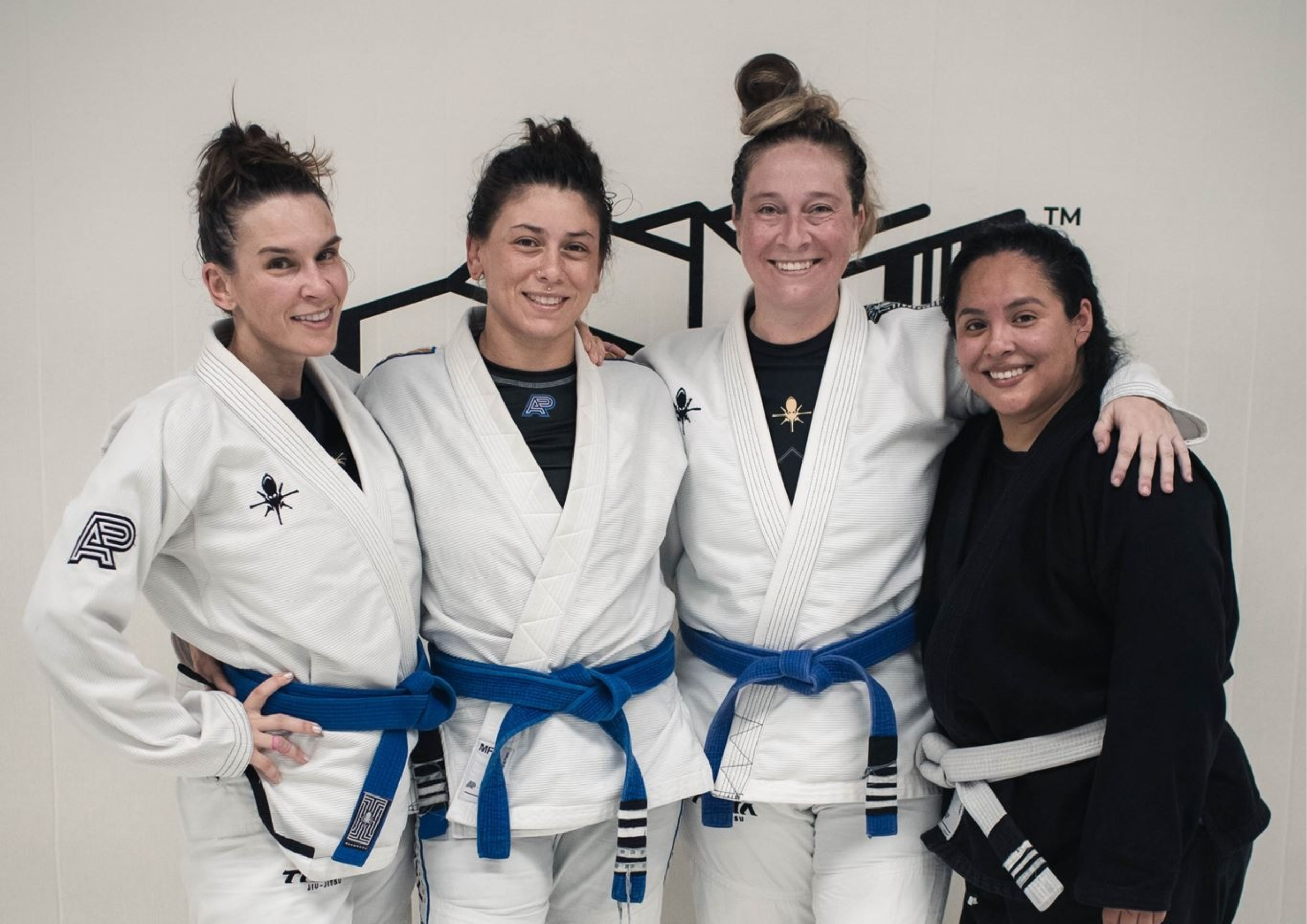
If you're thinking about starting Brazilian Jiu-Jitsu, you've probably heard about the different belt colors and wondered how long it takes to move from white belt to blue belt.
Unlike some martial arts, Brazilian Jiu-Jitsu is known for its demanding progression system. Earning a new belt generally requires more than memorizing techniques.
Students develop their skills through consistent training, practice, and an increasing understanding of how to apply Jiu-Jitsu principles.
So, how long does it actually take to earn your first major belt promotion?
How Long Does It Take to Get a BJJ Blue Belt?
For many adult students, earning a Brazilian Jiu-Jitsu blue belt takes approximately one to three years of consistent training.
This is a general estimate, not a guaranteed timeline.
Some students progress faster, while others take longer depending on attendance, skill development, previous experience, and their instructor's evaluation.
In Brazilian Jiu-Jitsu, belt promotions are not simply based on how many classes you attend.
Your instructor considers your overall development and readiness for the next level.
What Are the Brazilian Jiu-Jitsu Belt Colors?
For adult practitioners, the commonly recognized Brazilian Jiu-Jitsu belt progression is:
White Belt: The starting point, where students learn fundamental positions, movements, and techniques
Blue Belt: Demonstrates a developing understanding of BJJ fundamentals and the ability to apply them
Purple Belt: Represents a more advanced technical understanding and a growing personal style
Brown Belt: Reflects refined technique, experience, and a deeper understanding of the art
Black Belt: Represents a high level of technical knowledge, skill, and long-term dedication
Additional senior ranks exist beyond black belt.
Children follow a different belt progression system.
What Does a BJJ Blue Belt Mean?
A blue belt is an important milestone in Brazilian Jiu-Jitsu.
It generally indicates that a student has moved beyond the earliest stages of learning and developed a functional understanding of fundamental techniques.
Blue belts are often expected to demonstrate growing proficiency in areas such as:
Basic positional control
Escapes from common positions
Guard retention and guard passing
Fundamental submissions and defenses
Understanding leverage and body positioning
Applying techniques during controlled sparring
The exact expectations vary by academy and instructor.
A blue belt doesn't mean you've mastered Jiu-Jitsu. It means you've built a foundation for continued development.
What Affects How Quickly You Earn Your Blue Belt?
1. Training Consistency
Attending classes regularly gives you more opportunities to practice, receive feedback, and improve your technique.
A student training three times per week may accumulate experience faster than someone training once per week, but attendance alone doesn't determine promotion.
2. Technique and Understanding
Brazilian Jiu-Jitsu rewards technical development.
Understanding why a technique works is often just as important as remembering the movements.
Learning how to use leverage, timing, balance, and positioning can help you become more effective on the mats.
3. Previous Grappling Experience
Students with backgrounds in wrestling, judo, or other grappling sports may already be familiar with certain movements and concepts.
However, previous athletic experience doesn't automatically guarantee faster belt promotion.
4. Ability to Apply Techniques
As students gain experience, they learn to use techniques against resistance in a controlled training environment.
Applying a technique with a cooperative partner is different from using it during live practice.
Both types of training can contribute to skill development.
5. Your Instructor's Standards
Every academy evaluates promotions according to its teaching philosophy and standards.
At its core, belt progression should reflect meaningful development rather than simply reaching a specific number of training sessions.
Is Getting a Blue Belt in BJJ Hard?
Earning a blue belt takes dedication, but that doesn't mean Brazilian Jiu-Jitsu is only for experienced athletes.
Most people begin with little or no grappling experience.
The early stages of BJJ are about becoming comfortable with unfamiliar positions, learning to move efficiently, and developing an understanding of the fundamentals.
Progress can sometimes feel slow because Brazilian Jiu-Jitsu is a complex martial art.
It's normal to make mistakes, struggle with techniques, and need repeated practice.
Those challenges are part of the learning process.
Can You Get a BJJ Blue Belt in Six Months?
It may be possible in unusual circumstances, but six months is not a typical expectation for most adult beginners.
Some experienced grapplers or exceptionally dedicated students may progress quickly.
For most people starting from scratch, building the necessary understanding and practical skills takes considerably longer.
Rather than focusing on a specific deadline, concentrate on developing strong fundamentals and enjoying your training.
What Should White Belts Focus on Before Their First Promotion?
If you're a beginner, there are several skills worth prioritizing:
Learn the basic positions. Become familiar with guard, mount, side control, and back control.
Practice escapes and defense. Understanding how to protect yourself and improve your position is essential.
Develop good training habits. Arrive consistently, listen to instruction, and practice safely.
Ask questions. Understanding the details behind a technique can help you improve.
Be patient. Every class contributes to your development, even when progress isn't immediately obvious.
The goal isn't just to earn a belt. It's to become a better Brazilian Jiu-Jitsu practitioner.
Begin Your BJJ Journey at Tama Jiu-Jitsu in San Diego
Every black belt started as a white belt.
Whether your goal is to earn your first promotion, improve your fitness, develop self-defense skills, or simply try something new, the first step is getting on the mats.
At Tama Jiu-Jitsu in San Diego, students can begin learning Brazilian Jiu-Jitsu and work toward their personal goals through regular training.
Our academy is located in the Midway District, conveniently accessible from Point Loma, Mission Valley, and surrounding San Diego neighborhoods.
You don't need previous martial arts experience to start.
Ready to begin your Brazilian Jiu-Jitsu journey? Book your first class at Tama Jiu-Jitsu today!
3780 Hancock St., Unit C, San Diego, CA 92110
(619) 717-2789
Frequently Asked Questions About BJJ Belts
How long does it take to go from white belt to blue belt in BJJ?
Many adult students take approximately one to three years, although the timeline varies by individual and academy.
How many classes do you need to get a BJJ blue belt?
There is no universal number of classes that guarantees a blue belt. Promotions depend on technical development, consistency, and instructor evaluation.
Is blue belt considered a beginner in Brazilian Jiu-Jitsu?
A blue belt is generally considered an early intermediate milestone. Blue belts have developed a foundation but still have much to learn.
Can you start BJJ with no martial arts experience?
Yes. Brazilian Jiu-Jitsu beginners often start without any previous martial arts background.
Where can I start Brazilian Jiu-Jitsu in San Diego?
Tama Jiu-Jitsu offers BJJ training in San Diego's Midway District, serving nearby areas including Point Loma and Mission Valley.
